

What’s important for you to achieve and what are your motivations for realizing the achievement?
It’s a simple question but can you answer it with conviction?
Clarity. The two questions require clarity. I meet many younger people who struggle with those questions because they struggle to find clarity in their thinking. I see it in their work and from what they tell me, it affects their overall life as well.
Long before I became a CEO I worked for brilliant, but highly egotistical engineer named Roger. Roger liked to hold court, and while it could get annoying, many of the tangents he went off on became highly influential to me.
Roger once told me he was paid to make decisions. Roger was fond of saying most people just guess at a path forward, but he makes decisions. He analyzed, he asked insightful questions, he challenged the assumptions. He was a human computer, AI before the agents arrived. Underneath all the hubris I watched and realized the method to how he approached his decision making and saw the brilliance in it. He studied the inputs, modeled the outputs and found clarity. He understood theoretical from practical and applied a probability for success.
Not everything requires Roger’s level of analysis, but making good decisions is a skill and skills have to be practiced.
What Roger could do just in his head, I needed to take to paper and pen to analyze and map out the decisions. Clarity for me comes through words, mind maps with feedback loops, and lots of lists.
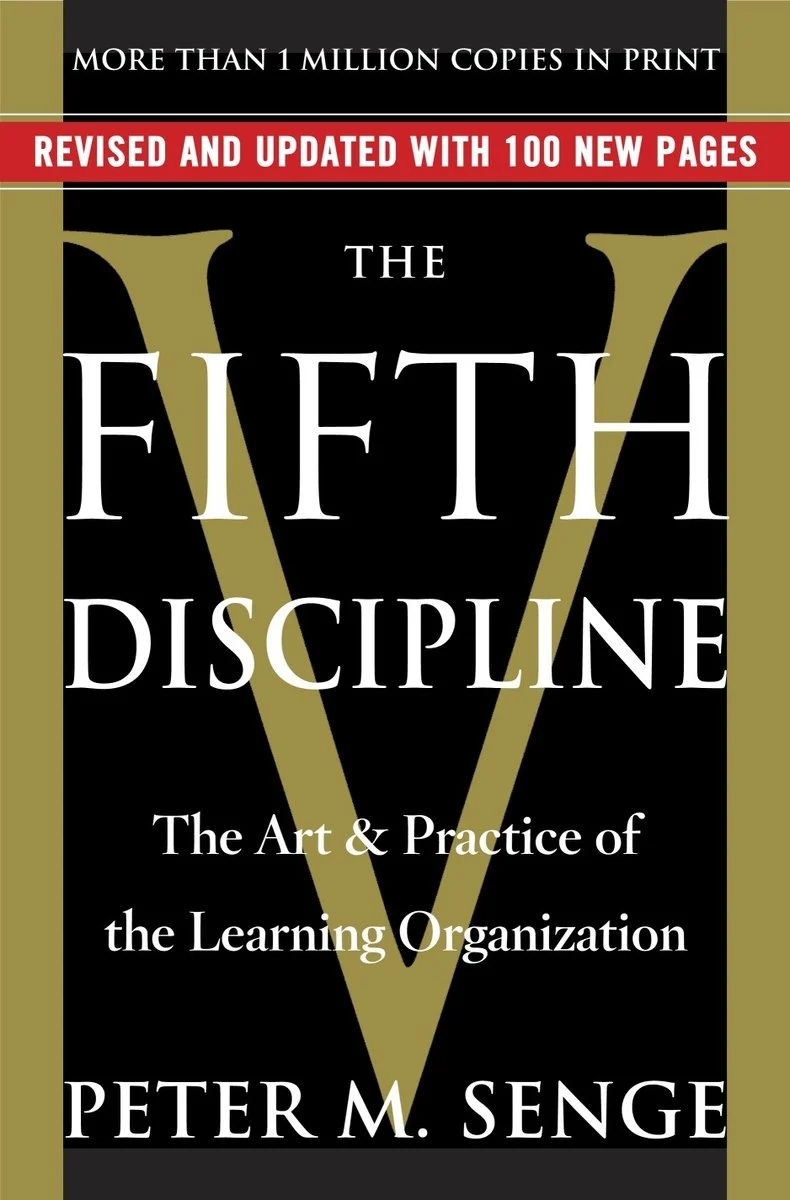
I’ve recommended Peter Senge’s ‘The Fifth Discipline” to many a new senior manager over the past 15 years. Senge teaches how to look at the micro and macro problem as a system, a system that can be manipulated once you understand how it works. There are so many business books out there that give nothing but platitudes, but Senge provides a system that you can apply to anything, including those two questions that started this article.
Journaling is my secret sauce. It’s where I take the complex and break it down to develop the decisions that drive my work and life. I practice a form of savage honesty within my journals ( plural- my first journal started in 1985) and they are not meant for anyone else’s eyes but mine. I rip life bare inside my journal, tearing myself down as needed to get to the truth, the right answer.
As experienced as I am, I still find myself getting sloppy in my goal execution. When that happens I increase my journaling, give myself feedback as to what’s working and what’s not, and I narrow my focus to get my most important goal accomplished. You don’t have to slay every giant simultaneously!
It doesn’t matter what Roger, Senge or this author does, the point is you need to develop a system that works for you. Yes, you might have a “a good gut” a “fifth sense” and “intuition” but you’re really just guessing without some way to distill the inputs and outputs to bring clarity.
You don’t need anything fancy. I write my journals using a Travelers Notebook with refillable inserts, but look at St Paul, a man who accomplished so much in his life. With bare basics, sometimes from prison cells, he crafted some of the most concise and direct action plans in the form of letters to specific cities and church communities in known history.
Paul didn’t need an app, or a MacBook, and neither do we. Pen, paper, and the one ingredient we didn’t discuss yet: critical thinking. Taking the time within our writing to question the assumptions, the evidence and to spot the biases from others and within ourselves.
So back to this: What’s important for you to achieve and what are your motivations for realizing the achievement?
Don’t just answer it, attack it, systematically, like a surgeon with a scalpel.
Practice makes perfect. Learn from your decisions, what went wrong, what went right, and adjust. It’s that simple.
Anton.